
Rival — The System of Action
Orchestration
in the
Flow of Work
Why the future of HR isn’t better software–it’s better coordination
01 — The Problem
HR Has a Coordination Crisis
Every HR team in the world has the same conversation:
“We have twelve tools and none of them talk to each other.”
(And usually, one of them is a spreadsheet.)
This isn’t a tools problem. Your HRIS stores the data. Your payroll engine runs the numbers. Your IT ticketing system manages access. Your onboarding platform holds the content. Each one does its job reasonably well.
The problem lies in the space between them: the manual handoffs, the status-check emails, and the processes that live in someone’s inbox because there is no better place to put them. According to a recent study from Deloitte, HR professionals spend an estimated 57% of their time on coordination work — not strategic work, not people work.
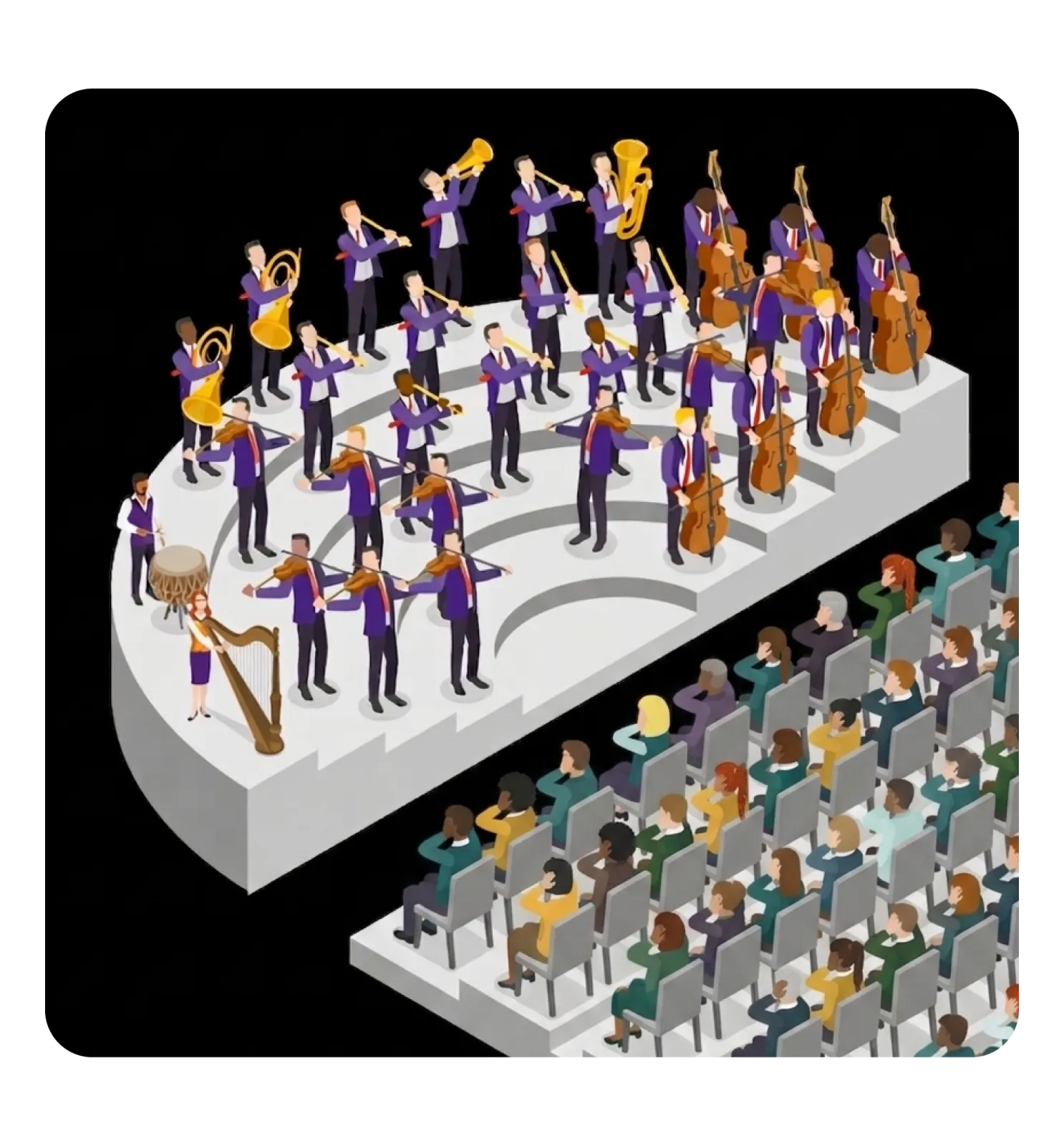
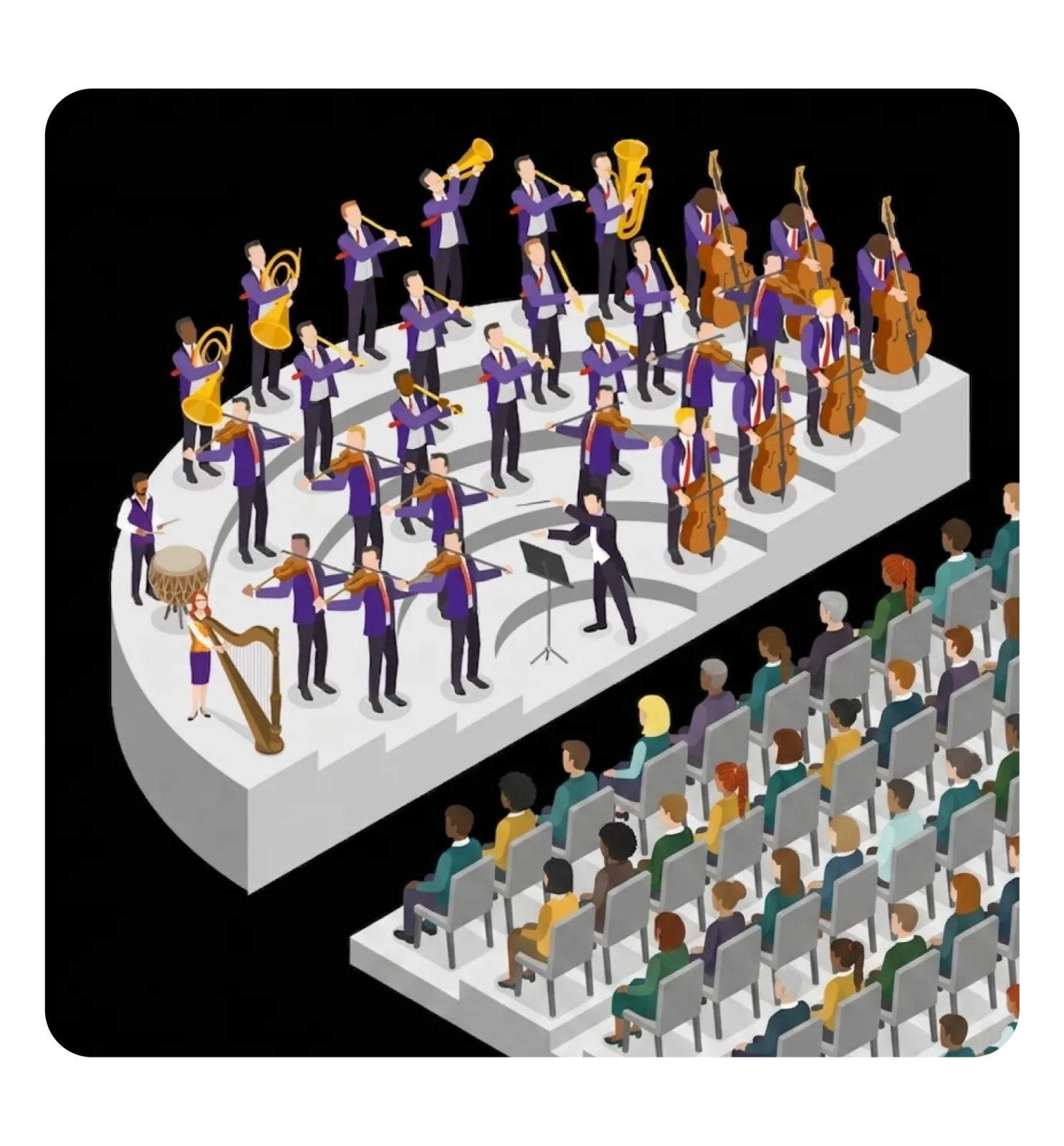
Think of it like an orchestra without a conductor. All the musicians are there, all individually talented, but without someone to tune them pre-performance and guide them through each measure, the result is noise instead of music.
of HR time lost to coordination overhead
average number of HR tools per enterprise
Most HR teams already have the tools they need; what they’re missing is something that connects them into a single, coherent workflow.
02 — The Distinction
Automation ≠ Orchestration
The HR industry has been sold on automation for a decade.
Automation, while critical, is a single player. It takes one task, removes the human from it, and repeats. Send a welcome email when someone is hired. Trigger a survey 90 days in. Flag when a form goes unsigned.
Each of these has value. None of them, alone, constitutes an onboarding workflow.
Orchestration is different in kind, not degree. It doesn’t just remove a step; it coordinates the entire sequence. It connects various tools. It routes the decisions. It adapts when something changes. It holds the thread across systems, people, and time.
Automation — Does One Thing
- ✕ Executes a single, isolated task when triggered
- ✕ Lives inside one system or workflow and cannot coordinate across systems
- ✕ Reduces manual effort for a specific step
- ✕ Breaks when context changes
- ✕ Requires IT or engineering to modify
Orchestration — Coordinates Everything
- ✓ Manages multi-step, cross-functional processes end-to-end
- ✓ Spans HRIS, payroll, IT, compliance, and people ops to unite the full HR technology stack
- ✓ Connects systems, people, and moments in one thread
- ✓ Adapts dynamically to role, team, and situation
- ✓ Configurable by HR teams without developer support
Bottom line: Automation handles a single task. Orchestration coordinates the entire system — spanning every tool, every team, and every moment that matters.
03 — The Framework
Record vs. Action
Your HRIS is essential. It’s your source of truth.
Workday, SAP SuccessFactors, Oracle HCM; these platforms represent decades of engineering effort to capture, store, and report on HR data. They’re excellent at what they do. And what they do is hold the record.
But data at rest is just potential. Someone gets promoted. A team restructures. A new hire joins on Monday. The moment that change is entered, a cascade of downstream actions should begin — provisioning, notifications, policy assignments, task routing, payroll updates, compliance checks.
In most organizations, that cascade is a series of manual handoffs. Someone notices the change. Someone sends an email. Someone follows up. The system of record recorded it, but nothing happened.
What you need is a system of action.
System of Record
Stores the Truth
Captures, maintains, and reports on workforce data. An authoritative source that organizations trust for compliance, auditing, and historical analysis. Essential — but static.
System of Action
Turns Data Into Motion
The orchestration layer. Takes signals from systems of record and translates them into coordinated, cross-functional action. Connects what happened to what needs to happen next.
A system of action — like Rival — isn’t competing with your HRIS. It’s completing it. The system of record knows what’s true. Rival acts on it — coordinating the tools, tasks, and people that need to respond every time the record changes.
04 — The Capability
What Orchestration Actually Does
Orchestration brings structure and intentionality to HR work. It doesn’t just deliver efficiency, but intelligence in motion.
When HR work is orchestrated, it doesn’t just run faster. It runs with context. The right task reaches the right person. The right system gets updated at the right moment. Exceptions are caught before they become incidents. And the people at the center of every process — employees and managers — have an experience that feels designed, not cobbled together.
Unified Systems
Eliminate the orchestra-without-a-conductor problem by connecting HRIS, IT, payroll, compliance, and people ops in one coordinated thread — without the manual handoffs between tools.
No-Code Agility
HR teams configure and change workflows in days, not months — without engineering support. When the business changes, your processes keep pace.
Personalized at Scale
Every employee gets an experience shaped by their role, team, location, and moment. Orchestration makes individualization operationally possible, not aspirational.
Data to Action
Bridge the gap between insight and outcome. When something changes in your system of record, orchestration ensures the right downstream actions happen — automatically and correctly.
05 — In Practice
Orchestration in Action
You have the framework. Now, what does orchestration look like in practice?
Consider a standard scenario: a high-performing individual contributor gets promoted to people manager. Simple in concept, but in practice, it touches nearly every system your HR team operates.
Without orchestration, this is a multi-week coordination exercise involving emails, manual system updates, a lot of following up, and a new manager who starts their first day without the tools, training, or context they need.
With Rival’s orchestration layer, one change in the system of record sets an intelligent, coordinated sequence in motion — with zero manual handoffs.
One trigger sets off six coordinated actions with zero manual handoffs. That is the difference orchestration makes.
And this is a single scenario. Rival’s orchestration layer operates across every consequential HR moment — onboarding, offboarding, role changes, leave, compliance events, and more — with the same intelligence and the same precision.
06 — The Rival Difference
The Missing Piece in
Your HR Tech Stack
Connective Intelligence
Rival wasn’t built to be another tool in the stack. It was built to be the intelligence layer that makes the stack work. Every feature, every workflow, every integration is oriented around one goal: ensuring that when something changes, everything that needs to respond — responds.
This is orchestration. It’s not magic — it’s architecture. It’s the deliberate design choice to position Rival between your systems and your people, translating data into action, every time, at scale.
Think back to the orchestra without a conductor. Rival turns dissonance into harmony, connecting notes, musicians, and audiences into one fulfilling experience.
Built for HR Teams, Not IT Departments
Most enterprise software is built for the people who implement it, not the people who use it every day. Rival is built for HR teams who need to move fast, adapt often, and do it without a developer in the room.
No-code workflow configuration and intuitive orchestration design enable HR teams to respond to a business change in days, not quarters. HR doesn’t wait for IT. HR leads.
Over the next decade, the organizations that will dominate and attract and retain top talent won’t have the best HRIS. They’ll have the best orchestration.
Ready to Move
From Record
to Action?
See how Rival’s orchestration layer connects your tools, coordinates your teams, and turns HR data into outcomes that matter.
Request a Demo